
Pavlok review (2026): is it worth $19.99 a month?
Wearable that uses a vibration, beep or zap to break habits
Black Friday: is there a Pavlok sale?
Pavlok report card
Weak · out of 4.0 · graded Nov 13, 2026
Best for a wrist device that interrupts habits
Pavlok is a wrist device that beeps, vibrates or zaps you when you slip, with an app for sleep and habit routines. You pay for hardware, from $159.99 to $219.99 or $19.99 a month to rent in the US and Canada, and the zap isn't for everybody.
Who Pavlok is for
- Fits if you want a physical nudge on your wrist when you slip on a habit
- Works for people who keep missing alarms and want a device that escalates
Who Pavlok is not for
- Skip it if you want software only, since every route here is a device purchase or rental
- Not for you if you dislike a startling zap, which the company itself describes as unpleasant
- Pricey if you're comparing with habit apps that cost a few dollars a month
- Watch out: the rental is for the US and Canada only, and the refund terms sit on a separate page
- Too light for tracking many habits on a checklist
Why Pavlok gets a 1.4
Five grades, each with its reason. The GPA is their average: an A is 4 points, an F is none.
- DValue for moneyDevices run $159.99 to $219.99 against a category where a paid app starts near $2.49 a month. The $19.99 monthly rental is only for the US and Canada.
- FFree plan and trialNothing free: no free plan and no trial. A 180-day money-back guarantee is listed, but that's not a trial.
- CFeaturesBeep, vibration and optional zap, smart alarms, habit routines, a buddy feature and automations. It reacts to a moment but it's no daily habit checklist.
- CEase of useNo store rating on record. You have to buy a device and pair it with the app before it does anything.
- CPlatforms and integrationsCompanion app for iPhone and Android only, with IFTTT, Zapier, Tasker and Shortcuts links. No web or desktop version.
What these grades rest on. Graded from this listing, whose facts were read from Pavlok's own pages on 13 November 2026. Not based on using the product, and shorter than our full reviews. How we review and grade.
Make Pavlok? Put this grade on your site

Paste this where you want the badge. It links here and follows the grade if it changes. About badges
<a href="https://toolgpa.com/tools/pavlok#review"><img src="https://toolgpa.com/badge/pavlok.svg" alt="Pavlok: 1.4 GPA on ToolGPA" width="196" height="56"></a>Where Pavlok stands among habit trackers
Pavlok's GPA of 1.4 is higher than 0 of the 64 other habit trackers we grade.
It stands best on platforms and integrations (C, above 6 of 64) and worst on free plan and trial (F, above 0).
Its paid plans start at $19.99 a month, against a middle price of $3.33 for the category: 37 of the 38 others that charge start lower.
On features, ease of use and platforms it scores 2.0 out of 4. 38 tools score higher and cost less.
Each grade against the category
Every bar is all 65 habit trackers we grade, cut by the letter each got. Pavlok’s own letter is outlined.
- DValue for moneyAbove 0 of 64, level with 5
- FFree plan and trialAbove 0 of 64, level with 3
- CFeaturesAbove 0 of 64, level with 39
- CEase of useAbove 0 of 64, level with 21
- CPlatforms and integrationsAbove 6 of 64, level with 39
Price against what you get
Each dot is one of 44 habit trackers. Further left costs less, and higher up scores better on features, ease of use and platforms. Point at a dot to see which tool it is.
Features, ease of use and platforms, averaged
What paid plans start at, a month (each step along is roughly double) →
- The best score at each price
- Has a free plan
- No free plan
Keep Pavlok, or make your own?
Keep it
The plain part of Pavlok you could make: habit tracking and goals. What surrounds it you could not. The 4 things listed below take a company, not a weekend.
That makes this kind of software worth paying for, not this one in particular: 64 of the 64 other habit trackers grade higher. It costs $239.88 a year.
What you could make
- Habit tracking and goals: an app builder makes these well.
What you could not
- A real app for iOS and Android. Something home-made would be a web page.
- It plugs into other products, IFTTT, Zapier and Tasker among them, and has an API.
- AI features, unless you pay a model provider for each request yourself.
- People on the other end: coaches. No app builder makes those.
What this rests on. Pavlok’s listing: what it does, where it runs, what it plugs into and what it costs. It is a judgement about the kind of software this is. We have not built a replacement for it, and making your own means looking after it too. How we decide, and every tool’s verdict.
What is Pavlok?
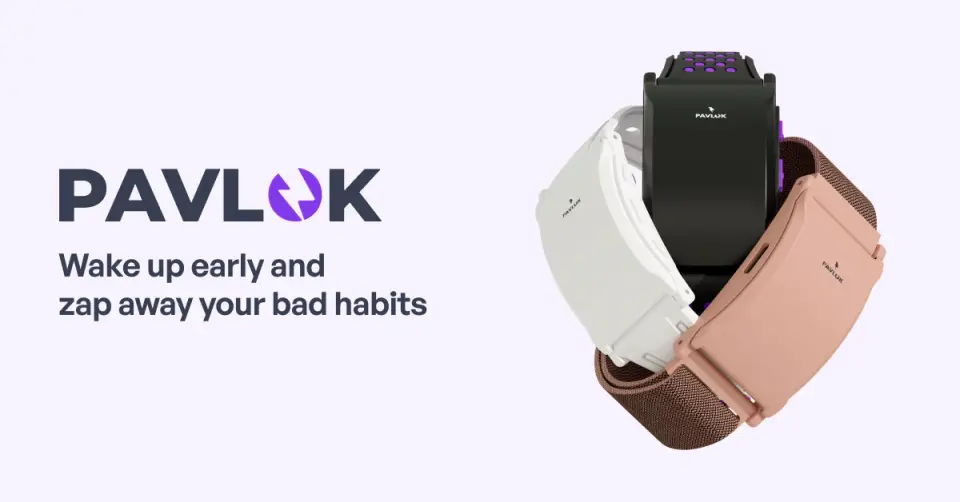
Pavlok makes wrist devices, including the Pavlok 3 and the Shock Clock alarms, that give a beep, vibration or optional electric zap, with intensity set in a companion app. The app tracks sleep and habits, and the company adds an AI coach, a buddy feature and monthly challenges. The devices are sold in its own store.
Worth knowing
- It is hardware: the price is a device purchase or a rental, not a software subscription.
- The zap is described by the company as unpleasant and startling, so it is not for everyone.
- The rental program is offered for US and Canada only, according to the product page.
- The page lists a 180-day money-back guarantee, but check the returns page for its terms.
Key features
- Beep, vibration and zap
- Devices escalate from a chime or vibration to an electric zap; the page says intensity is adjustable from 0 to 100%.
- Smart alarms
- Shock Clock devices can require actions such as jumping jacks, scanning a QR code or solving a puzzle to switch off.
- Habit routines in the app
- The Pavlok app lets you create and customize routines, track habits and sleep, and use AI insights.
- Buddy and challenges
- A trusted friend can trigger the zap for you, and monthly Pavlok Challenge groups add peer accountability.
- Automations
- Connects to services such as IFTTT and Zapier, and offers an API and a productivity extension.
Pavlok pricing
As of Nov 13, 2026, Pavlok is a paid product, starting at $19.99 per month (Shock Clock 3 rental); devices from $159.99.
- Starts at
- $19.99 per month (Shock Clock 3 rental); devices from $159.99
- Free plan
- None
- Free trial
- None listed
| Plan | Price | What you get |
|---|---|---|
| Shock Clock 3 rental | $19.99per month, rental with option to buy; US and Canada | Rents the Shock Clock 3 with no contract; the page says you can return it and may buy it outright. |
| Shock Clock 3 | $159.99one-time purchase | Wake-up wearable that escalates from vibration and chime to a zap, controlled in the Pavlok app. |
| Pavlok 3 | $184.99one-time purchase, Sports and Deluxe editions | Wearable that interrupts unwanted habits in the moment with beep, vibration or an optional zap. |
| Shock Clock MAX | $219.99one-time purchase | Sleep and wake-up device with a backlit display, sold as a one-time purchase. |
Read from pavlok.com on Nov 13, 2026. Prices change, so confirm with Pavlok before you buy.
How people rate the Pavlok app
4.5
out of 5 for the iPhone and iPad app
- 5 stars81%
- 4 stars6%
- 3 stars3%
- 2 stars3%
- 1 star7%
3,244 ratings on the App Store in the United States, read Nov 13, 2026. It rates the app, not everything the product does. See the listing
Works with
Pavlok alternatives
- Pavlok vs Forfeit
Free trial · from $3.99
- Pavlok vs stickK
Free plan
- Pavlok vs Beeminder
Free plan · from $8/mo
- Pavlok vs Habitica
Free plan · from $4.99/mo
- Pavlok vs Finch
Free plan · from $5.99





Common questions
Does Pavlok have a Windows app?
No Windows app was listed when its pages were read on Nov 13, 2026. Pavlok is listed for iOS and Android.
Does Pavlok have a macOS app?
No macOS app was listed when its pages were read on Nov 13, 2026. Pavlok is listed for iOS and Android.
Is Pavlok open source?
Pavlok is not described as open source on its own site, as read on Nov 13, 2026.
Does Pavlok have an API?
Yes. Pavlok offers a public API, according to its own site.
Sources for this page
The prices, plans, platforms and features above were read from these pages on Nov 13, 2026. What people say is linked where it appears.